
Staining is the cheapest thing you can do to extend the life of a wood fence, and it is the thing most often done at the wrong time with the wrong product. Timing matters more than brand.
When to stain a new fence
New cedar needs to give up some moisture before it will accept a penetrating stain. Stain it the week it goes up and the finish sits on the surface instead of soaking in, and it starts failing almost immediately.
Pressure-treated pine needs longer still, because it arrives wet from the treatment process. The practical test is simple: sprinkle water on the wood. If it beads and sits, the wood is not ready. If it soaks in, it will take stain.
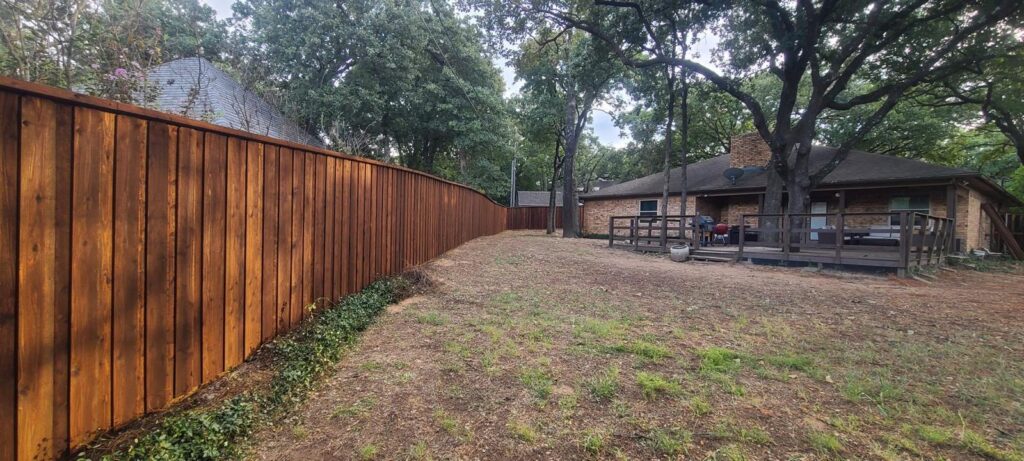
Why washing and brightening comes first
On an existing fence, the preparation decides the result. Weathered cedar carries a grey surface layer of degraded fibre plus whatever mildew and dirt has accumulated, and stain applied over that is bonding to a layer that is already letting go.
Washing removes the dirt and the grey. A brightener neutralises the cleaner and restores the wood tone so the new stain colours evenly rather than blotching. Skipping either step is why a re-stain sometimes looks patchy within a season.
That sequence — wash, brighten, stain — is what our fence staining and restoration service actually is.
- Wash to remove dirt and grey fibre
- Brighten to even out the tone
- Stain only when the wood accepts water
- Re-coat before it fails, not after
How often, in this sun
North Texas is hard on finishes. West and south-facing runs take the most ultraviolet and will always need attention before the shaded sides do, which is why a fence often looks fine from the patio and tired from the street.
The signal to re-coat is water no longer beading on the surface. Re-coating at that point is straightforward. Waiting until the wood has gone grey again means starting with a full wash and brighten, which costs more.
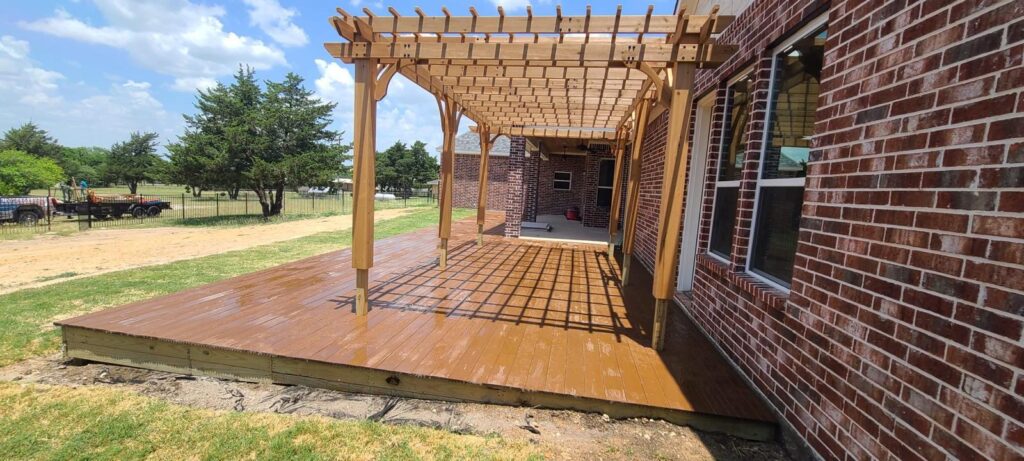
Doing it yourself, and where it goes wrong
Staining a fence is genuinely within reach as a weekend job, and plenty of our customers do it. The mistakes are consistent: skipping the wash and brighten, working in direct sun on hot wood so the stain flashes before it penetrates, and applying too thin a coat on the end grain at the top and bottom of each picket.
Work a full picket at a time from top to bottom rather than sweeping across several, keep a wet edge, and do the sunny sides first while you still have energy — they need it most.
Solid, semi-transparent or clear
Semi-transparent is what we use most: it puts pigment in the wood for ultraviolet protection while still letting the grain show. Clear finishes look good briefly and offer little sun protection, because pigment is what blocks the ultraviolet.
Solid stains cover completely and last well, but they behave more like paint — when they eventually fail they peel rather than fade, and the next preparation is harder. In an HOA subdivision, check the approved palette before choosing anything.
Frequently asked questions
How soon can I stain a new cedar fence?
Once the wood will accept water rather than beading it. New cedar needs to release some moisture first, and treated pine needs longer because it arrives wet from treatment. Staining too early leaves a finish sitting on the surface.
How often should a fence be re-stained in North Texas?
When water stops beading on the surface. West and south-facing runs take the most sun and will need it first. Re-coating at that point is far cheaper than waiting until the wood greys and needs a full wash and brighten.
Do I need to wash the fence before staining?
Yes, and brighten it too. Weathered wood carries a grey layer of degraded fibre that new stain cannot bond to properly. Washing removes it and a brightener evens the tone so the stain does not blotch.
Get your project measured
Grace Construction builds fences, gates, decks and outdoor living across Johnson, Tarrant and Ellis counties from our shop in Alvarado. Free on-site measure, written price, no obligation.