In most newer North Texas subdivisions the HOA is a bigger constraint than the city. A rejected submittal costs weeks, and the reasons for rejection are boringly predictable. Here is what committees ask for.
Four things that get a submittal rejected
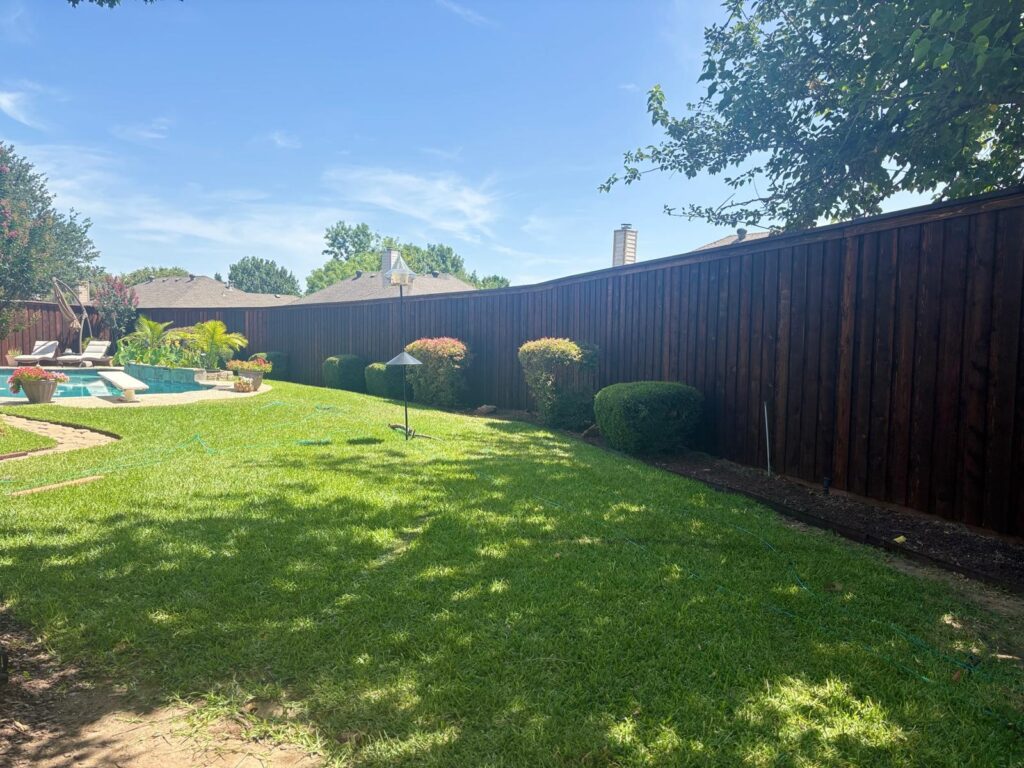
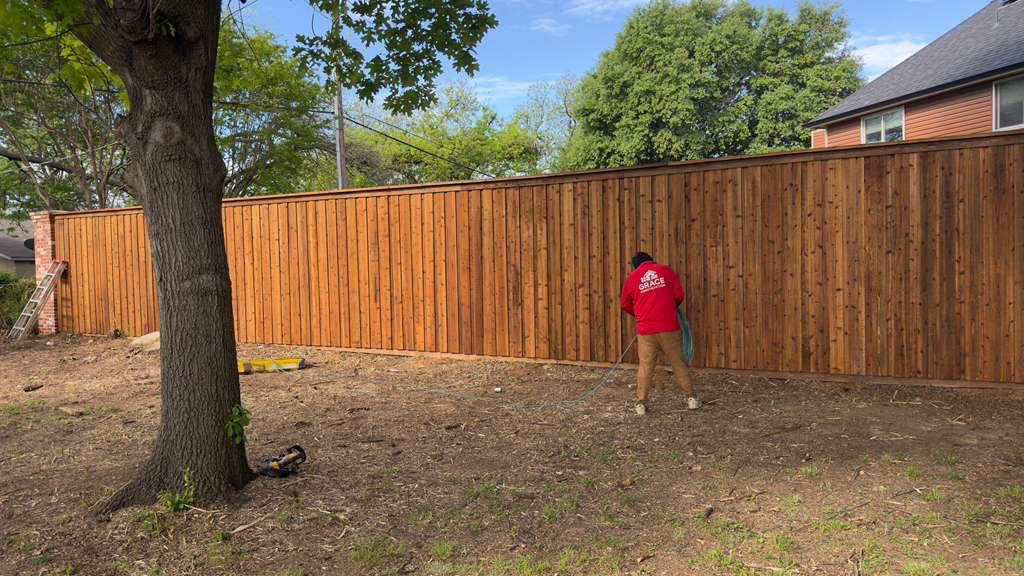
Wrong finished side. Nearly every HOA requires the smooth, finished face of the fence to face outward — toward the street or the neighbour. Build it the other way and you will be taking it down.
Height that does not match the street. Committees care about consistency along a shared run. If every fence on the street is six foot, an eight-foot fence is a rejection even where the city would allow it.
A stain colour outside the palette. Most communities publish an approved list. “Cedar-coloured” is not a specification, and a sample board is worth more than a paragraph.
No survey markup. Committees want to see where the fence sits relative to the property line and any easement. A marked-up copy of your survey answers it in one page.
What a complete package looks like
A submittal that gets approved first time usually contains a drawing showing the fence line, height and gate positions; a material specification naming the species, board pattern, post material and hardware; a stain sample or product name from the approved palette; and the marked-up survey.
We assemble that and submit it on your behalf. It is part of the job rather than an extra, mostly because we would rather control the quality of the paperwork than wait on a rejection.
- Fence line and height drawing
- Material and hardware specification
- Stain sample from the approved palette
- Marked-up property survey
Shared property lines and the neighbour conversation
The most common source of delay is not the committee at all — it is a shared line where two owners have not agreed. Who pays, where exactly the line runs, which way the finished side faces, and what happens to the existing fence are all worth settling before a submittal goes in.
We are happy to walk both parties through the scope. A ten-minute conversation on site with both neighbours present prevents most of the disputes we see.
If your submittal gets rejected
A rejection is usually one line long and not very explanatory — “materials not approved” or “height inconsistent”. The useful move is to ask the committee exactly which provision it failed, then resubmit against that specific point rather than guessing.
Most rejections we see come down to a stain outside the palette or a height that does not match the run. Both are quick to correct if you find out precisely what was wrong.
Where this matters most
The subdivisions west and north of Red Oak, the newer developments in Burleson off Hidden Creek Parkway, the growth north of Venus and much of Mansfield and Midlothian are all HOA-governed.
In an established city like Benbrook or a small town like Keene, you are more likely to be dealing with the city alone. Both still need doing properly.
Frequently asked questions
Do you handle the HOA submittal for me?
Yes. We prepare the drawings, material specifications, stain samples and survey markup that architectural committees typically request, and we submit them on your behalf. It is included in the job, not an extra.
How long does HOA approval take?
It depends entirely on the community — some review continuously, others meet monthly. The delay we can control is rejection and resubmission, which is why we would rather assemble the package properly the first time.
Which way does the finished side of the fence face?
Outward, in almost every HOA and many city ordinances — the smooth face toward the street or the neighbour. On a shared line it comes down to what you and your neighbour agree, and we build to that.
Get your project measured
Grace Construction builds fences, gates, decks and outdoor living across Johnson, Tarrant and Ellis counties from our shop in Alvarado. Free on-site measure, written price, no obligation.