Three patterns account for nearly every cedar fence in North Texas. They cost different amounts, they age differently, and only one of them stays gap-free once the wood dries out.
Side-by-side: the baseline
Pickets butted edge to edge on one side of the rails. It is the least expensive pattern because it uses the least cedar, and on the day it goes up it looks solid.
The catch is shrinkage. Cedar arrives with moisture in it and gives that up over the first year in a Texas summer, and as each picket narrows slightly the joints open. You end up with a thin gap between every board. For a boundary fence where privacy is not the point, that is fine. For a back yard you actually sit in, it is the thing people regret.
Board-on-board: what we build most
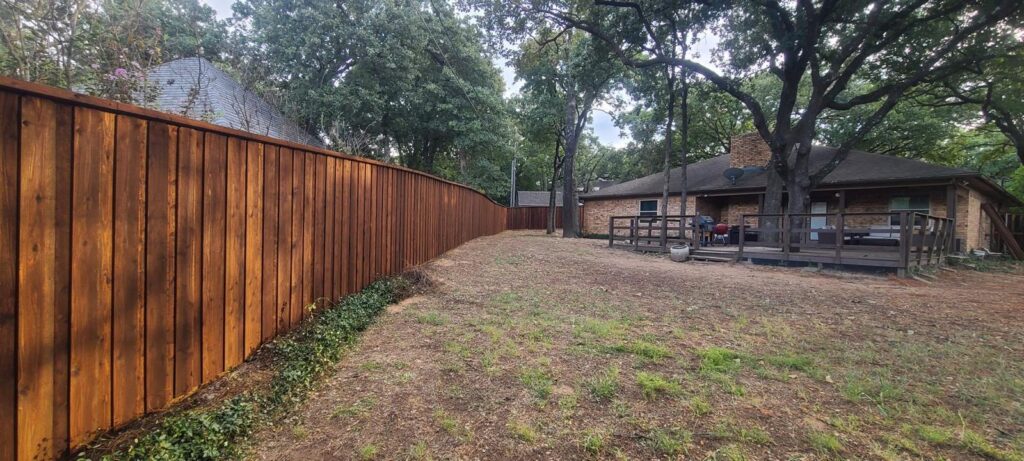
Pickets overlapped so each board covers the edges of its neighbours. It uses roughly a third more cedar, which is where the extra cost comes from, and in exchange the fence stays private permanently — when the boards shrink, the overlap simply narrows.
It is also the pattern most HOA architectural committees expect to see, and it handles North Texas wind well because the overlap still lets a little air through rather than presenting a solid sail.
Horizontal: the modern look, built properly
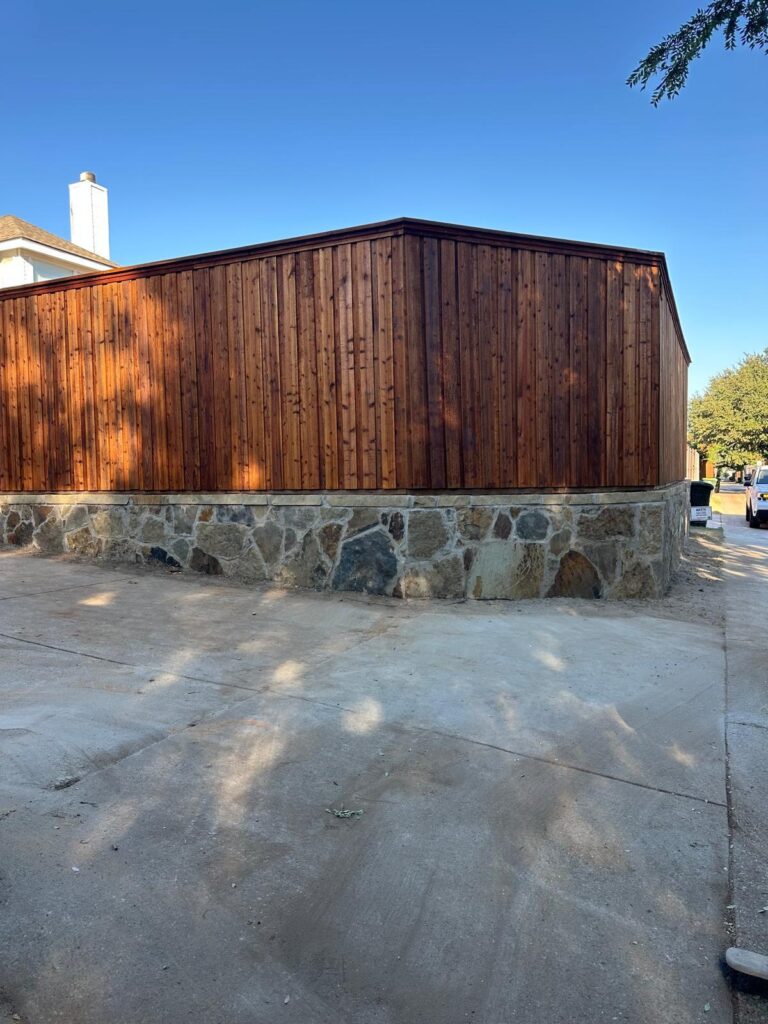
Boards run horizontally between posts. It suits contemporary houses and it looks expensive, because it is — the cost comes from post spacing.
A horizontal board has no support between posts, so on standard eight-foot spacing it will bow within a couple of seasons. Built correctly it needs posts closer together, or an intermediate stiffener, and better-grade boards because a bow that would be invisible on a vertical picket is obvious on a horizontal run. When somebody quotes horizontal cheaply, that is what has been left out.
How each pattern handles North Texas wind
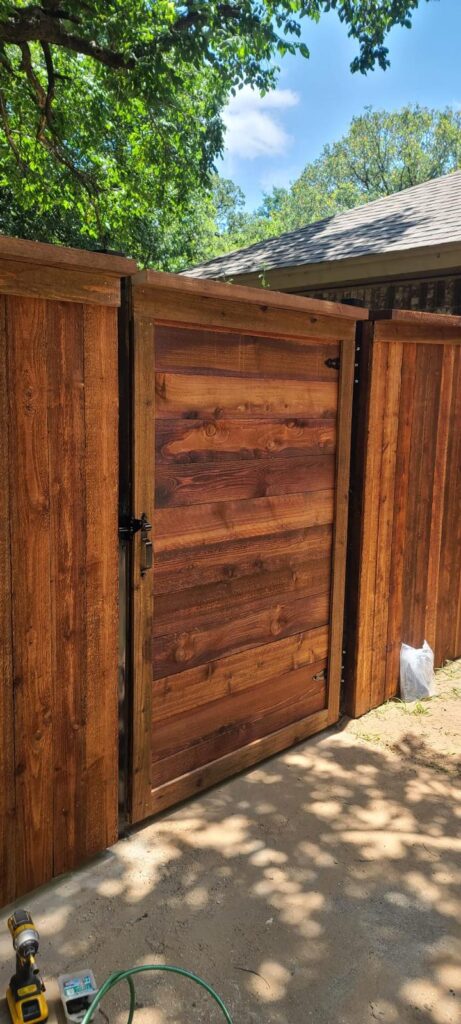
Wind is a real load here, and a fence is a large sail. A completely solid barrier takes the full force; a pattern that lets a little air through takes less.
Board-on-board is a good compromise — visually solid but not airtight, because the overlap leaves a slight path for air. Side-by-side becomes more solid as it ages and the boards cup. Horizontal on wide post spacing is the weakest of the three, which is another reason the closer spacing matters.
Post depth and diameter matter more than the pattern in a real storm, but the pattern decides how much load reaches those posts.
Which to pick
If you want privacy that lasts and you are in an HOA subdivision, board-on-board is almost always the right answer. If you are fencing a large perimeter where cost per foot dominates and privacy is secondary, side-by-side is reasonable. If the look matters more than the budget and the house supports it, horizontal is worth it — built with the closer spacing it actually needs.
All three are available across our cedar and wood fence installation service area.
- Board-on-board for lasting privacy
- Side-by-side for long, cost-led runs
- Horizontal for contemporary houses
- Closer post spacing on horizontal
Frequently asked questions
Will a side-by-side cedar fence develop gaps?
Yes, almost always. Cedar loses moisture over its first year and each picket narrows slightly, which opens a thin gap at every joint. Board-on-board avoids this because the pickets overlap.
Why does a horizontal fence cost more?
Post spacing. A horizontal board is unsupported between posts, so it needs posts closer together or an intermediate stiffener to stay flat, plus better-grade boards. A cheap horizontal quote usually means standard spacing, and it will bow.
Which pattern do HOAs prefer?
Board-on-board, in most North Texas communities, with the finished side facing outward and a stain from the approved palette. We prepare and submit the package either way.
Get your project measured
Grace Construction builds fences, gates, decks and outdoor living across Johnson, Tarrant and Ellis counties from our shop in Alvarado. Free on-site measure, written price, no obligation.