
If you have watched a three-year-old fence start to lean in North Texas, the wood is rarely the problem. The soil is. Here is what is happening underground and what a proper installation does about it.
What the clay is doing
Much of this area sits on Blackland Prairie clay, some of the most expansive soil in Texas. It absorbs water and swells, then dries out in an August with no rain and shrinks hard, opening the cracks you can see across a bare yard.
That movement is not gentle. A post sitting in that soil gets gripped and levered every time the moisture changes, and the movement is greatest near the surface where wetting and drying are most extreme. Red Oak, Waxahachie and Midlothian sit squarely in it.
Why shallow, narrow holes fail
A post set shallow in a narrow hole is the worst case. It is short enough that its whole buried length is inside the zone doing most of the moving, and narrow enough that there is very little concrete mass to resist being pushed.
The failure is predictable: the post rocks slightly with each wet-dry cycle, the gap between concrete and soil opens, water gets in, and once there is a void the post has room to lean. From there it accelerates.
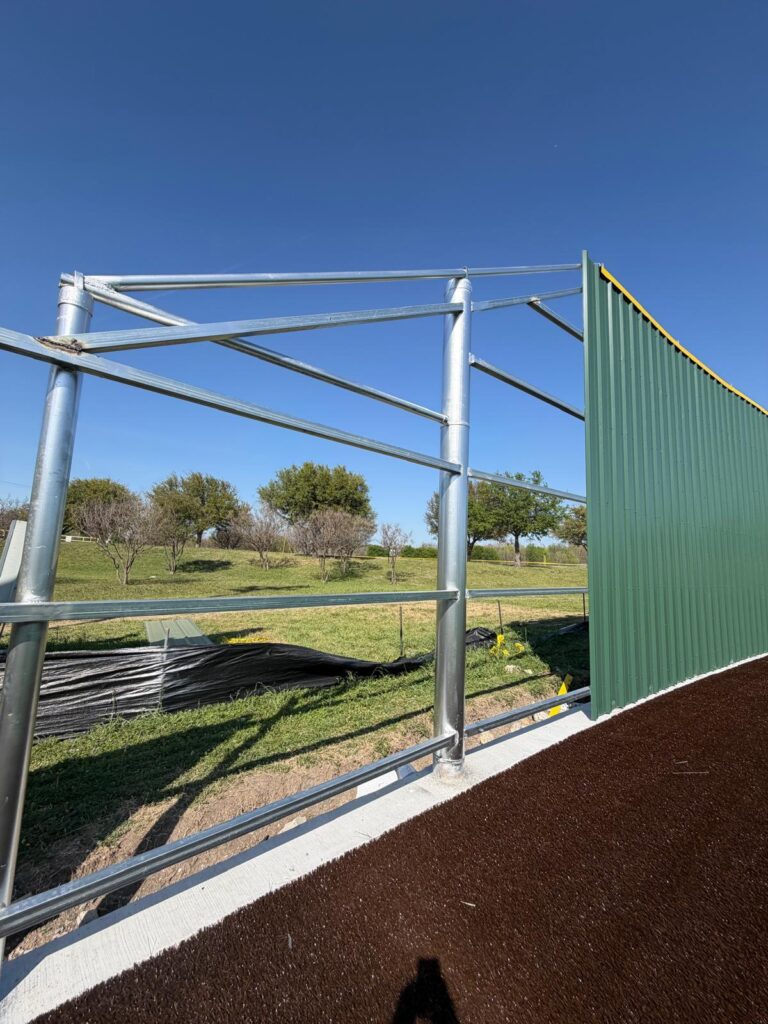
What actually works
Depth. Set below the layer where the soil does most of its moving, so the bottom of the post is anchored in ground that stays comparatively stable.
Diameter. A wider hole means more concrete mass and more surface for the soil to push against uselessly. Narrow holes are faster to dig and that is the only thing they have going for them.
A crowned collar. The concrete at the top should be sloped away from the post so water sheds off rather than pooling against the wood. A flat or dished top holds water exactly where you least want it.
Upsized gate posts. Gate posts carry a swinging load all day. They get set deeper and braced, because a gate that drops out of square is the single most common fence complaint we get called about.
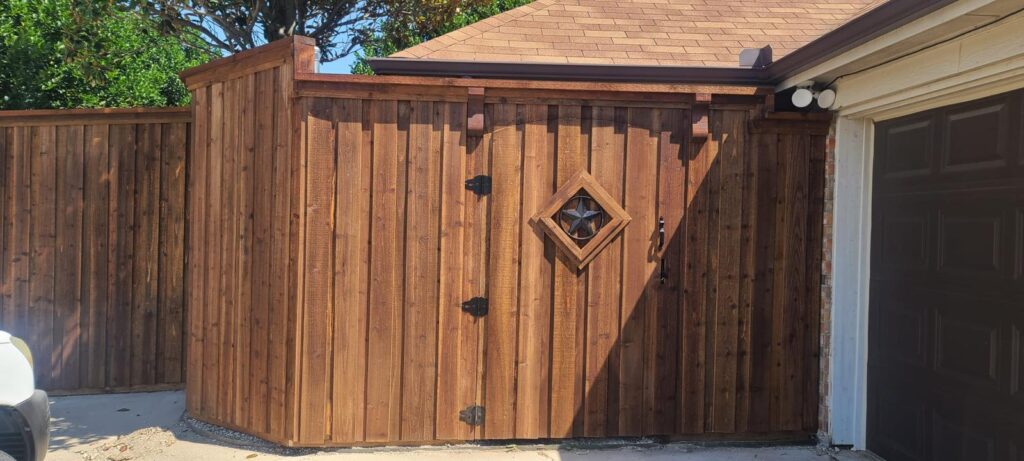
- Set below the active moisture zone
- Wide holes, real concrete mass
- Concrete crowned to shed water
- Gate posts upsized and braced
If your fence is already leaning
It is usually fixable without a rebuild. If the pickets and rails are sound and only some posts have moved, we reset the affected posts properly and the fence goes back to square.
If the posts have rotted at grade, or the concrete has broken up, resetting is throwing money at a bad frame — that is a replacement conversation. We will tell you which one you have before we quote. See fence repair and restoration.
Frequently asked questions
Why is my fence leaning after only a few years?
Almost always the posts, not the wood. North Texas clay swells when wet and shrinks hard when dry, and a post set shallow in a narrow hole gets levered sideways by that movement until a void opens and it can lean freely.
Can leaning posts be reset without replacing the whole fence?
Often, yes. If the pickets and rails are sound and the posts themselves have not rotted at grade, resetting the affected posts brings the fence back square for a fraction of a rebuild.
Are steel posts better in expansive clay?
They help, because steel does not rot at grade where wood does. But depth, hole diameter and a crowned concrete collar matter more than the post material — a steel post set badly still leans.
Get your project measured
Grace Construction builds fences, gates, decks and outdoor living across Johnson, Tarrant and Ellis counties from our shop in Alvarado. Free on-site measure, written price, no obligation.