Cedar and pressure-treated pine both last in North Texas, but they fail in different ways and they do not belong in the same parts of a fence. Here is how we choose between them.
What cedar does well
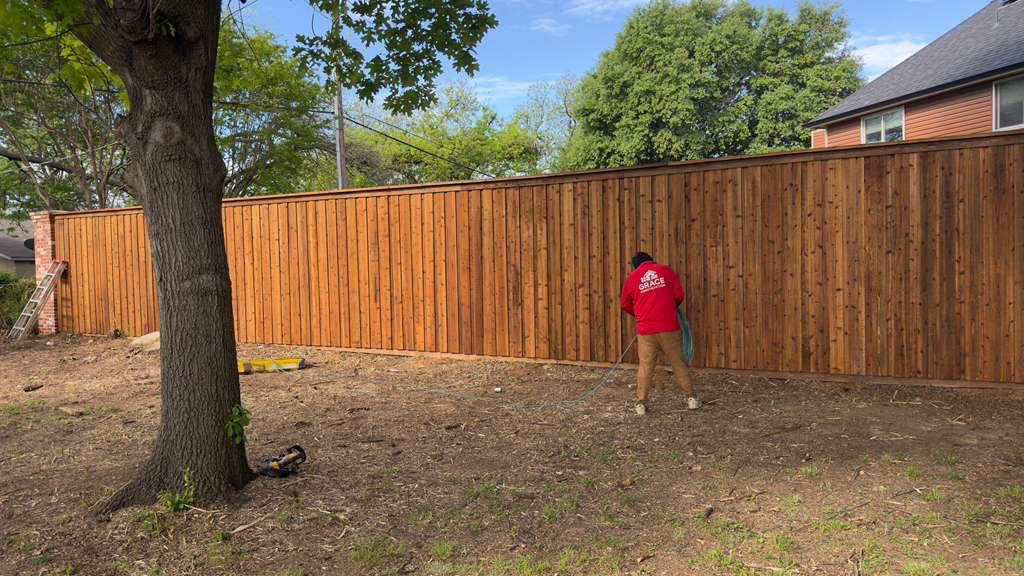
Cedar contains natural oils that resist rot and insects without chemical treatment, and it is dimensionally stable — it stays reasonably flat and straight as it dries. That matters for pickets, where a twisted board is visible from across the yard.
It also takes stain well and weathers to a silver-grey if you leave it alone. The trade-off is that cedar is softer than pine and costs more.
What pressure-treated pine does well
Treated pine is stronger and cheaper, and the treatment gives it real rot resistance in ground contact. That combination makes it a sensible structural material — rails, and posts where steel is not being used.
Its weakness is movement. Pine arrives wet from treatment and it warps, cups and twists as it dries, which is exactly what you do not want in a picket. It also needs to dry before it will hold a stain properly, so a pine fence stained the week it is built usually looks poor within a year.
How we actually combine them
The common-sense build in North Texas is cedar where you can see it and strength where you cannot: cedar pickets for appearance and stability, treated or steel structure behind them.
On long runs and on any lot where the soil moves, we recommend galvanised steel posts outright. Steel outlasts the pickets it carries, and the post is the component whose failure means rebuilding rather than repairing. That is covered under our cedar and wood fence installation work.
- Cedar pickets for stability and looks
- Treated pine or steel for structure
- Galvanised steel posts on long runs
- Stain only once the wood is ready
Cost over the life of the fence
Cedar costs more per foot up front. Treated pine is cheaper to buy and more expensive to live with, because the warping shows up as pickets that twist away from the rails and need refixing or replacing.
The calculation that actually matters is cost per year of service, and it is dominated by the components you cannot see. A cedar fence on steel posts costs the most on day one and is usually the cheapest over twenty years, because the frame never needs replacing and the pickets stay flat.
What about composite?
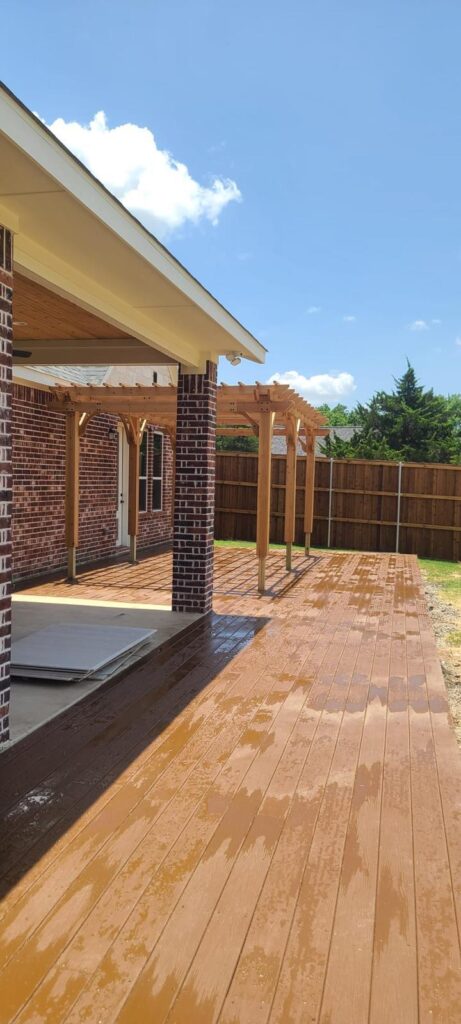
Composite makes more sense on a deck than on a fence, and we use it regularly for decking where the walking surface takes the wear. As fencing it is expensive per foot and it moves with temperature, which needs designing for.
If maintenance is what you are trying to escape, the more common answer in North Texas is powder-coated aluminum or a precast concrete wall, neither of which needs staining at all.
Frequently asked questions
Which lasts longer in Texas, cedar or treated pine?
In a fence, it depends where the wood is. Cedar resists rot and insects naturally and stays straighter, which makes it better for pickets. Treated pine is stronger and cheaper and holds up in ground contact, which makes it reasonable for structure. Steel posts outlast both.
Can I stain a pressure-treated pine fence right away?
Not well. Treated pine arrives wet and needs to dry before a stain will penetrate. Staining too early leaves a finish that sits on the surface and fails early.
Do I need steel posts?
Not always, but they are worth it on long runs and on lots where the soil moves a lot. The post is the part whose failure turns a repair into a rebuild.
Get your project measured
Grace Construction builds fences, gates, decks and outdoor living across Johnson, Tarrant and Ellis counties from our shop in Alvarado. Free on-site measure, written price, no obligation.