
Pool barrier rules are the one area of fencing where getting it wrong has consequences beyond looks. They are also widely misexplained online, including on the state law question.
The point most guides get wrong
Texas Health and Safety Code Chapter 757 sets barrier requirements — but it applies to multi-unit rental complexes and property owners’ associations, not to a private pool at a single-family home.
That does not mean a homeowner has no requirements. Cities across North Texas adopt residential building code provisions that carry their own pool barrier standards, and your HOA may impose its own on top. So the honest answer is that the binding rules for a single-family pool are usually municipal and contractual rather than that particular state chapter — and you still have to meet them.
The specifications that recur
Across the standards that get adopted, the same numbers keep appearing. A barrier at least 48 inches high, measured on the outside. No gap greater than 4 inches between the bottom of the barrier and the ground. No opening anywhere in the barrier that would pass a 4-inch sphere — which is what governs the spacing between aluminum pickets.
Gates are the part that fails most often: self-closing and self-latching, with the latch on the pool side and set high enough that a small child cannot reach over and release it.
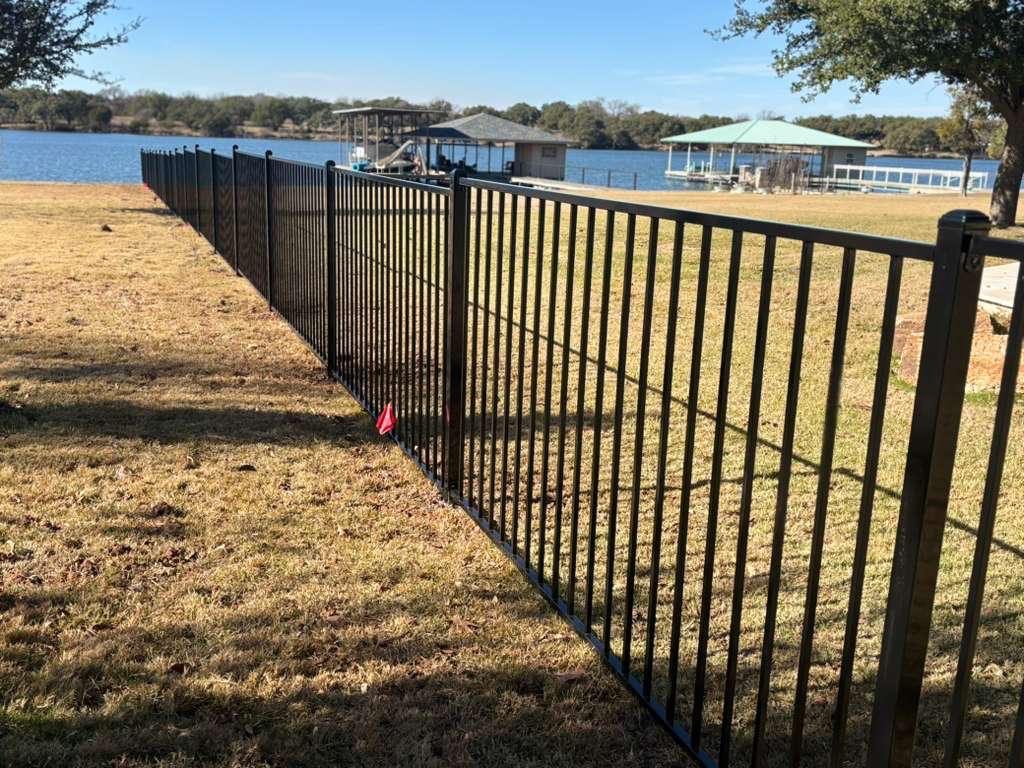
- 48 inches minimum height
- No gap over 4 inches at the bottom
- No opening passing a 4-inch sphere
- Self-closing, self-latching gate hardware
Why the hardware is the part that matters
A pool gate is the only gate on a property that has to work correctly every single time, including when somebody is carrying towels and not paying attention. Self-closing hinges and a self-latching catch are not optional extras.
They also have to keep working. Hardware that latches in April and misses by half an inch in August, after the gate has taken a season of heat and the post has moved slightly, is a barrier in name only. That means bracing the gate post properly and choosing adjustable hardware.
Aluminum, cedar or both
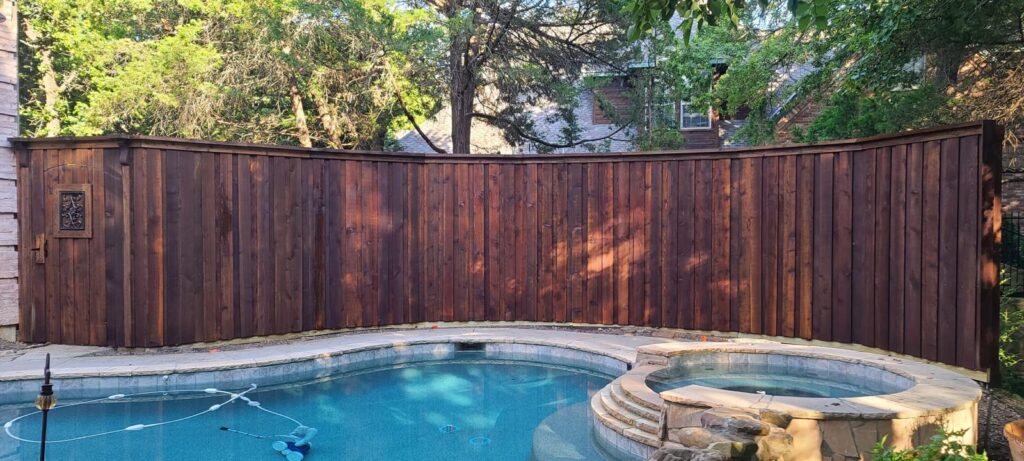
Powder-coated aluminum is the usual choice for the pool enclosure itself: the picket spacing is designed around the sphere rule, it does not rot, and it keeps sightlines to the water.
Plenty of properties use both — cedar on the perimeter for privacy from neighbours, aluminum as the inner barrier around the water. On lots near water, such as parts of Benbrook, aluminum also handles the damp better than steel.
Confirm the specific requirements with your city and your HOA before building. We do that as part of the estimate.
Frequently asked questions
How tall does a pool fence have to be in Texas?
The standards commonly adopted require a barrier at least 48 inches high measured on the outside, with no gap over 4 inches at the bottom and no opening that would pass a 4-inch sphere. Your city and HOA set what applies to your property.
Does Texas state law require a fence around my home pool?
Health and Safety Code Chapter 757 applies to multi-unit rental complexes and property owners' associations rather than private single-family pools. But cities adopt residential code provisions with their own barrier requirements, and HOAs add their own, so requirements usually still apply.
What kind of gate does a pool fence need?
Self-closing and self-latching, with the latch on the pool side and set high enough that a child cannot reach it. It also has to keep working after a Texas summer, which means a properly braced gate post and adjustable hardware.
Get your project measured
Grace Construction builds fences, gates, decks and outdoor living across Johnson, Tarrant and Ellis counties from our shop in Alvarado. Free on-site measure, written price, no obligation.