An uncovered slab in North Texas goes unused from June to September. All three of these fix that, but they give different amounts of shade, attach to the house differently, and cost quite different amounts.
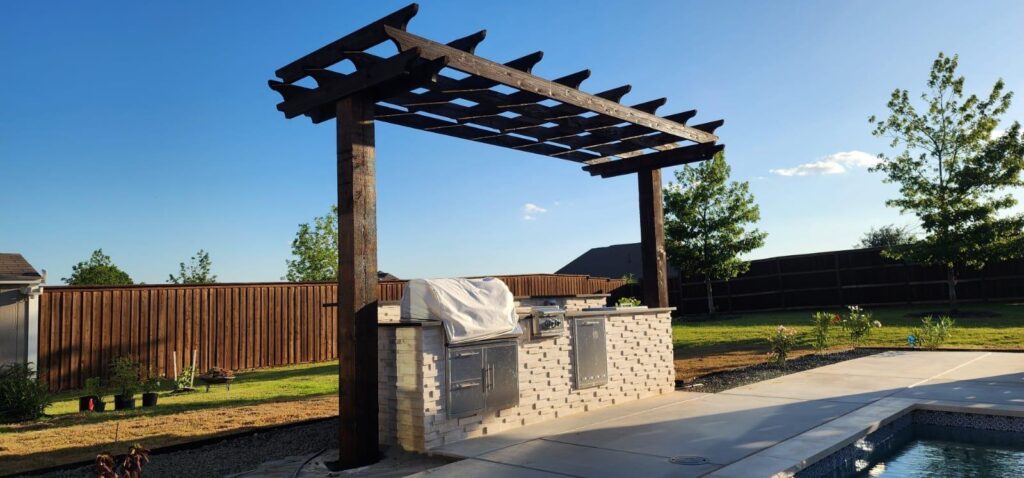
Pergola: light, open, partial shade
A pergola is an open framework of beams and rafters. It gives dappled shade rather than full cover, it does not keep rain off, and it is the least expensive of the three.
What it does well is define a space. An expanse of patio with nothing above it reads as leftover ground; put a pergola over it and it becomes an outdoor room. Combined with a climbing plant or a shade sail it moves closer to real cover.
Pergolas suit an existing slab, and they are the easiest to add later without touching the house.
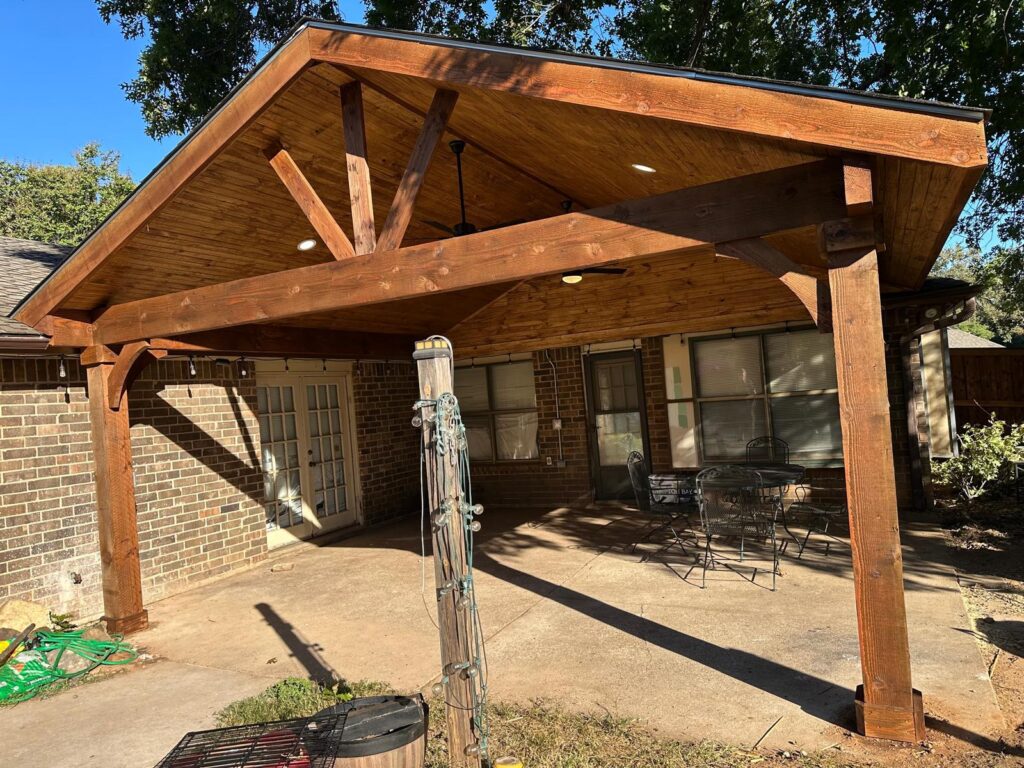
Patio cover: attached, solid, all-weather
A patio cover is a solid roof attached to the house, usually gable or shed form, and it is what most people actually want when they say pergola. It gives full shade and keeps rain off, and it makes the covered area usable year-round.
Because it ties into the house structure, it has to be done properly: matched to the roof pitch and shingle so it does not look bolted on, flashed correctly where it meets the wall, and built to permit and inspection. Getting the flashing wrong is how you introduce a leak into the house.
It is also the right moment to pre-run wiring for fans and lighting. Ceiling fans make a covered patio usable a good ten degrees hotter than it would otherwise be, and running the cable during framing is far cheaper than cutting into a finished tongue-and-groove ceiling later.
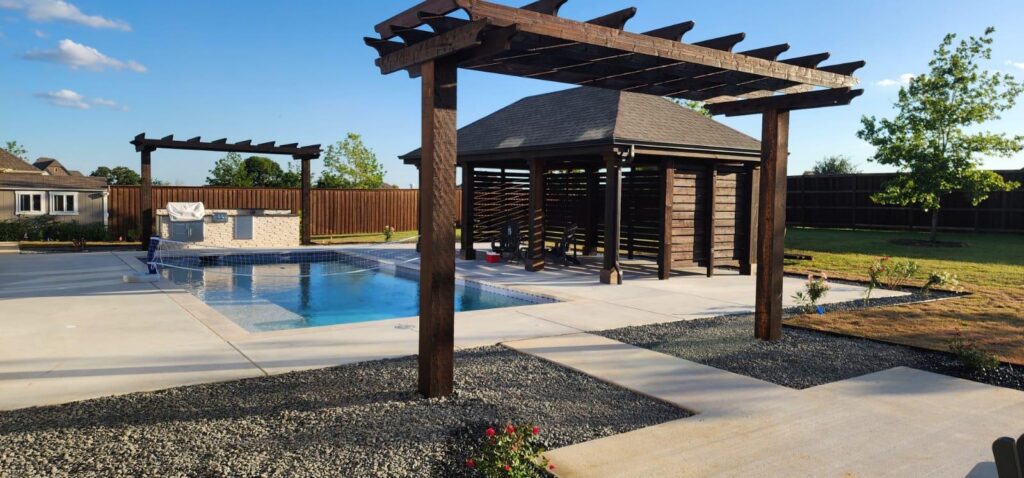
Pavilion: free-standing, the whole outdoor room
A pavilion is a fully roofed free-standing structure — it does not touch the house, so it can sit anywhere in the yard, typically over a pool deck or an outdoor kitchen.
It is the most expensive of the three and the most transformative. Because it stands alone it can be oriented for the view or the breeze rather than being dictated by the wall it attaches to, and it works well where the patio is not adjacent to the house.
Pavilions are usually the anchor for an outdoor kitchen, because they give you a roof over the cooking area and somewhere to hang lighting.
Choosing between them
If you want to define an existing patio cheaply and dappled shade is enough, build a pergola. If you want a space that works in summer heat and in rain, and it adjoins the house, build a patio cover. If the spot you want to cover is away from the house, or you are building around a pool or a kitchen, build a pavilion.
All three need engineering for North Texas wind loading, and anything structural gets built to permit and inspection. See pergolas and pavilions and patio covers.
- Pergola for definition and dappled shade
- Patio cover for full, all-weather cover
- Pavilion for free-standing outdoor rooms
- Wiring pre-run for fans and lighting
Frequently asked questions
What is the difference between a pergola and a patio cover?
A pergola is an open framework of beams that gives dappled shade and does not keep rain off. A patio cover is a solid roof attached to the house that gives full shade and works in the rain. Most people picturing a pergola actually want a patio cover.
Do I need a permit for a patio cover in North Texas?
Generally yes, because it is a structure attached to the house. We build to permit and inspection and handle the application as part of the job.
Can I add fans and lights to a patio cover?
Yes, and it is much cheaper to pre-run the wiring during framing than to cut into a finished ceiling afterwards. Fans make a covered patio comfortable in noticeably hotter weather, so they are worth planning in.
Get your project measured
Grace Construction builds fences, gates, decks and outdoor living across Johnson, Tarrant and Ellis counties from our shop in Alvarado. Free on-site measure, written price, no obligation.