
A cedar fence in North Texas gets hit by hard sun, hard rain and soil that moves under it. Almost none of the care it needs is difficult — it is just easy to forget until something has already failed. Here is the year, in order.
Spring: inspect while the ground is soft
Spring is when the soil is at its wettest and posts are least stable, which makes it the best time to find problems. Walk the fence and push every post firmly. Note any that move at the base — that is your list for the year.
Check the gates while you are there. A gate that has begun to scrape or needs lifting to latch is telling you its post has shifted, and a gate post caught in spring is a far smaller job than one left until it has dragged the frame out of square.
Clear soil, mulch and plant beds away from the bottom of the pickets. Anything holding damp against the wood at grade is accelerating rot at exactly the point where the fence is weakest.
- Push-test every post
- Check gate swing and latch
- Pull soil and mulch back from pickets
- Note anything for repair before summer
Summer: the sun does the damage
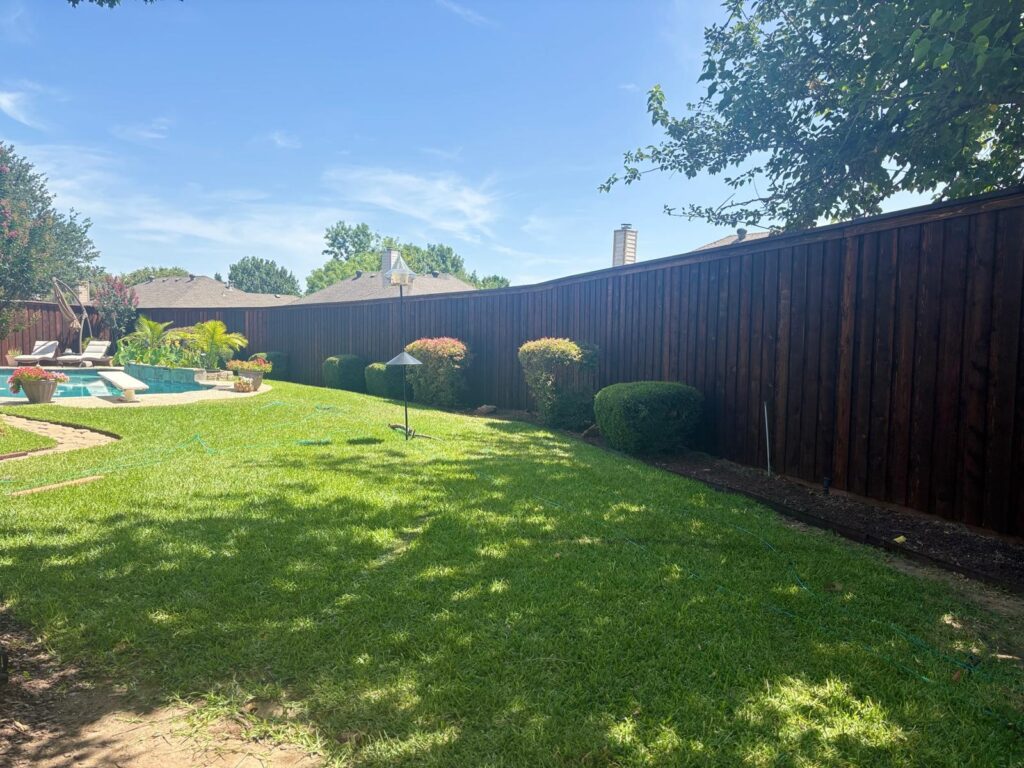
The Texas summer is what ages a fence. Ultraviolet breaks down the surface fibres and the heat drives moisture out of the wood, which is why west and south-facing runs always look older than the shaded sides of the same fence.
It is generally too hot to stain well in the peak of it — stain flashes off before it can penetrate, and applying it to wood that is hot to the touch gives a poor finish. If a run is looking tired in July, plan the work rather than rushing it.
One genuinely useful habit: if you are watering beds along the fence line, keep sprinklers off the wood. Repeated direct wetting on one section is a reliable way to create a rotten patch in an otherwise good fence.
Autumn: the best staining window
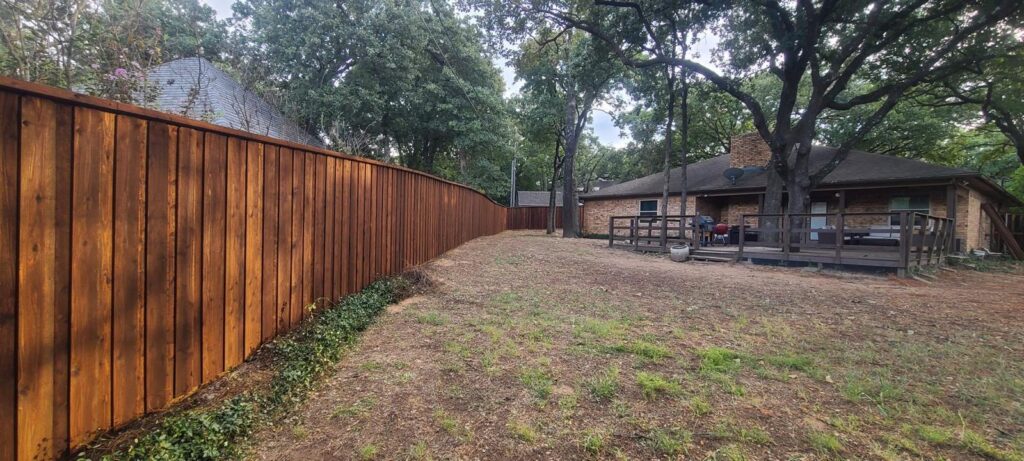
Autumn is the sweet spot for staining in North Texas. The wood has dried through summer, temperatures are workable, and the finish has time to cure before winter damp arrives.
The test for whether a fence needs re-coating is simple: sprinkle water on it. If it beads, the finish is still working. If it soaks straight in, the wood is unprotected and it is time.
If it has gone grey, do not just stain over it. Wash and brighten first — the grey is degraded surface fibre, and stain applied on top of it is bonding to a layer that is already letting go.
- Water test before deciding
- Wash and brighten weathered wood
- Stain in workable temperatures
- Do the sunny sides first
Winter: storms and standing water
North Texas winter storms are what find the weaknesses spring inspection flagged. After any serious wind, walk the line again and look for leaning posts, loose rails and pickets that have popped their fixings.
Watch for standing water along the fence line after heavy rain. Water that sits against posts for days at a time is doing more damage than anything else in the year, and it usually points to a grading or drainage problem worth fixing properly.
Small fixings caught in winter — a few nails, a rail re-secured, one post reset — are what stop a fence needing replacement three years early. If the list has got beyond a weekend, our repair and restoration crew handles exactly this work.
Frequently asked questions
When is the best time of year to stain a fence in North Texas?
Autumn, generally. The wood has dried through the summer, temperatures are workable, and the finish has time to cure before winter damp. Staining in peak summer heat gives a poor result because the stain flashes off before it penetrates.
How do I know if my fence needs re-staining?
Sprinkle water on it. If the water beads up, the finish is still doing its job. If it soaks straight into the wood, the fence is unprotected and it is time to re-coat.
Does sprinkler spray damage a wood fence?
Yes, more than people expect. Repeated direct wetting on one section keeps that area damp and creates a rotten patch in an otherwise sound fence. Aim irrigation away from the wood.
Get your project measured
Grace Construction builds fences, gates, decks and outdoor living across Johnson, Tarrant and Ellis counties from our shop in Alvarado. Free on-site measure, written price, no obligation.